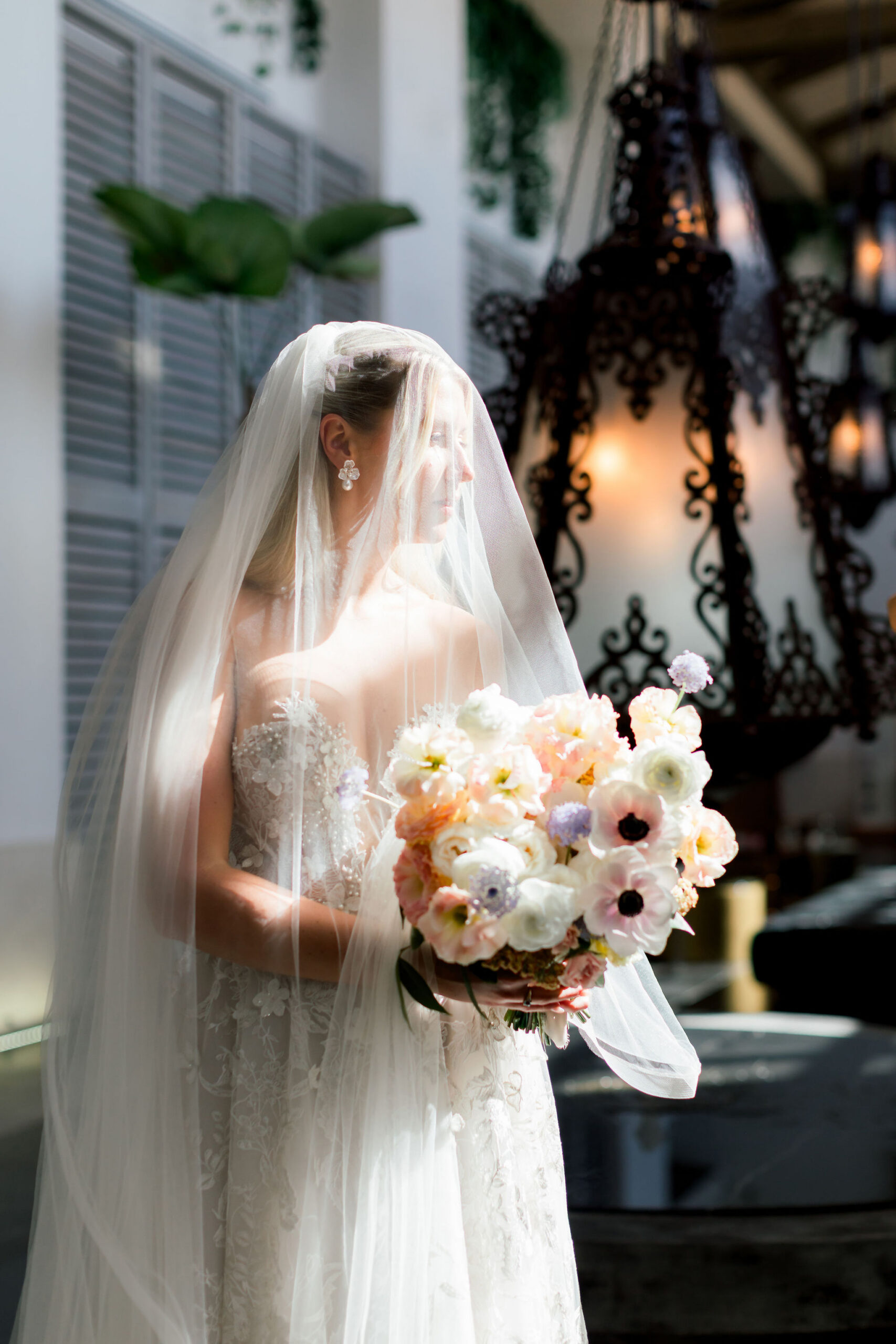


How studying chiaroscuro, from Caravaggio to Rembrandt, changed the way I see every portrait, and every wedding.
There is a painting by Caravaggio, The Calling of Saint Matthew, where a single shaft of light cuts across a dark room and lands, almost accidentally, on a man’s face. That beam doesn’t illuminate everything; it illuminates exactly what matters.
I’ve returned to that painting many times over the years. Not just in a museum, but in my mind while I’m on set, waiting for the right moment to press the shutter. Because what Caravaggio understood about light is the same thing I try to bring to every fine art portrait I make: shadow is not the absence of something—it is the presence of depth.
Why I Keep Returning to Chiaroscuro
This series of fine art portraits was built entirely around that philosophy. No fill lights or reflectors chasing away the dark—just one source, one subject, and the space between them.
Chiaroscuro—from the Italian chiaro (light) and scuro (dark)—is a technique the Old Masters used to create volume, emotion, and psychological tension on a flat canvas. While Rembrandt used it to make ordinary people feel monumental, Vermeer used it to make domestic stillness feel sacred.
As a fine art photographer, I find myself drawn to that same tension. Modern portrait photography often trends toward brightness: clean, evenly lit, and technically flawless. There is beauty in that, but there is something brightness can’t always hold: the feeling of a moment that is private, weighted, and real.
How I Directed This Fine Art Portrait Session
For this series, I worked with a single window in the late afternoon. That quality of light—diffused, directional, and slightly cool—is the closest natural equivalent to the controlled studio light painters used centuries ago. It wraps around a face without flattening it, falling off into darkness at exactly the right rate.
I didn’t give my subject a shot list or a pose guide. I gave her a feeling: Nostalgia. That instruction, more than any technical direction, is what creates the emotion you see in these frames. When I work with a single light source, I’m not making a technical choice; I’m making a compositional one, deciding that the story lives in the contrast.


Bringing a Painterly Eye to Editorial Wedding Photography
I am primarily known as a destination and editorial wedding photographer, and this is where my fine art practice quietly shapes everything I do on a wedding day.
- Reading the light: When I walk into a ceremony venue, I’m not scanning for the best-lit backdrop. I’m reading where the light enters, how it falls, and what it leaves in shadow.
- The power of stillness: When a bride is standing in a hallway, half in light and half in darkness, I don’t reach for a reflector. I stay still and I wait.
- Feeling over documentation: This patient, painterly attention is what I believe separates editorial wedding photography from mere documentation.
The difference between a beautiful photo and a photograph that makes you feel something years later often comes down to a single decision about light.


I occasionally open a limited number of fine art portrait sessions outside of wedding season. These sessions are available in Riviera Maya, New York, or Paris for individuals, couples, or creatives who want photographs that feel more like paintings than content.
If this language resonates with you, I’d love to talk.


